Showing posts with label Computer animation. Show all posts

Wednesday, 10 June 2015

Big Hardware Upgrade for Bucks Animation Resources

The New Lenovo Animation Workstation at Bucks!

As the Animation Courses at Bucks continue to grow, the University is keen to nurture our talented students and make sure they have the best kit to work on.

Working with out new IT partner, Lenovo, we are re-equipping our Animation Studios with high end ThinkStations.  These will be specified to meet the Autodesk requirements and will include dual screens to allow our students to experience a professional environment. We will now be able to set up poses on one screen and adjust curves on the other.  We can have a model on one screen and set up materials or edit UV's on the other screen. Any aspiring 3D Artist should consider a dual screen set up as it makes many processes far more efficient and enjoyable.

We are also setting up a dedicated Render Farm on a new local network specifically for the Animation courses!

Monday, 7 July 2014

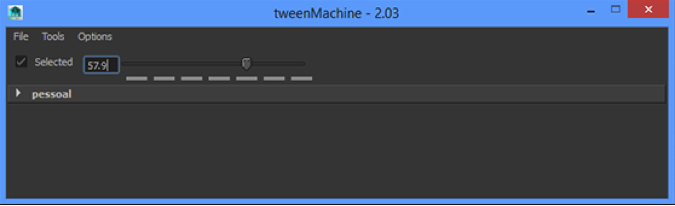
The TweenMachine - the Animator's Best Friend


One of the many advantages of learning to animate in Maya is the wide range of free plugins developed by the user community around the world. A free plugin is just that - a piece of code that can be added to your copy of Maya, free of charge. One of the most useful is the tweenMachine, created by Justin Animator, which helps animators to create breakdown poses in Maya on stepped curves. It's a time saving tool that takes much of the labour out of breaking down your character poses once you are happy with the timing of the main blocking of your animation.

Saturday, 24 May 2014

Free Laptops for our new students in October!


Why do we offer free laptops to our freshmen students in October? The reason is simple: we want all of our students to be able to work equally as well from home as they do at university. One of the many career paths open to a skilled digital animator is to do freelance work from home, and the best way to do this is to master as many software packages as possible, allowing you you to take on small jobs even while you are still at university. So what kind of computer do our students actually get? Dave Creighton explains how it works.