How do you create thumbnail sketches for character animation? Learning how to create thumbnail sketches is a very important skill, even for animators who don't draw well, because thumbnail sketches are an important tool for planning animation. Even 3D animators who aren't that comfortable with drawing are encouraged to have a go at the thumbnailing process. Watch the video above to see how we would go about creating some rough thumbnail sketches for this month's "11 Second Club".

Showing posts with label Planning animation. Show all posts
Showing posts with label Planning animation. Show all posts
Friday, 29 April 2022

Thursday, 10 March 2022
Nine Ways to Create a Great Pose
How do you create a great pose in animation? Creating great poses is a necessary skill for all animators to learn. In the video above, I suggest nine ways that an animator can create a great pose - the key starting point for a great acting scene.
Sunday, 27 February 2022
Why Using Live Action Reference Can Lead to Floaty Animation - And How to Fix It
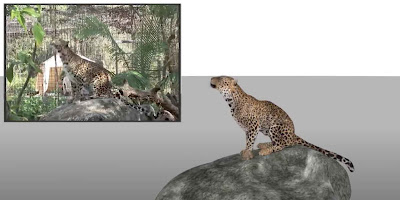 |
| Leopard Animation by Daniel Amor |
Live action reference helps animators to create believable, realistic animation. Once you have done that, push it further. Go beyond the live action, push the poses, make the transitions snappier. Give the audience a reason to watch your work - give a performance.
Saturday, 21 August 2021
How to Achieve Snappy Animation Timing

Even timing and spacing produces soft, floaty animation, lacks definition and feels mushy. This is particularly the case when the animation is based on live action reference. Reference, if followed too closely, can end up feeling floaty and weightless.
The solution to this problem is to tighten up your key poses, and spend more time in the key poses, rather than transitioning slowly from one pose to another. Animators call this approach "snappy timing", or "tightening up the poses". Your goal is to make the motion feel dynamic and crisp.
Friday, 29 November 2019
Animators Always Start With a Story

Junior animators focus on learning technique - and technique is very important. But it is also important to think carefully about the story behind your shot.
Who is your character, and why are they doing what they are doing? What is the scene about? What do they want, and what do they fear? These things are important because if your shots forms part of an interesting story, it will be much more interesting to watch.
Wednesday, 27 November 2019
Royce Wesley and the Pixar Workflow
 |
| Incredibles 2 |
Royce is an experienced character animator whose animation credits include Brave, Coco, Robots and Inside Out. He visited us in London to mentor our animation students and help make sure we are hitting the highest levels of quality in character animation.
Understanding how to plan your work is one of the key parts of the animator's skill set. Every animator has their own unique approach, and it's important to develop a workflow that you can rely on to get your shots approved without too much stress.
Thursday, 2 May 2019
How to Plan Out a Creature Animation Shot
 |
| Kiwi by Oliver Canovas |
Animal and creature animation is among the most challenging work an animator can tackle, because it involves creating believable animation - usually based on live-action reference - and also an element of anthropormisation - making the animal or creature act in a believable way, perhaps including dialogue and lipsync.
So, how should our students plan out a piece of animal or creature animation? Start by watching the 10 minute video below.
Thursday, 4 April 2019
How to Plan a Dialogue Shot
 |
But how do you get started with dialogue animation? One of the most common problems encountered by student animators is how to block out a shot from scratch, starting with nothing but a blank screen and a line of dialogue. How do you begin?
After all, in animation you get nothing for free. You start off with a digital puppet, usually in a stiff "T-pose", and have to figure out the rest yourself.
Monday, 25 March 2019
Twelve Top Tips for Animating in Maya

Directors want quality, Producers want speed. To survive in the industry for long, you must please both. Animation producers like animators who do the job well, finish on time, and are nice to work with. If you have all three of these qualities then you will have a long and successful career in the industry.
Below are our Twelve Top Tips for animating in Maya, to help you be both good, fast and reliable. Most of the principles below are things that I learned from the lead animators on "Robots"; the film where I first learned 3D animation in Maya.
Sunday, 7 June 2015
How Did Disney Animators on Frozen Approach Their Shots?

Watch Disney's smash hit animated film Frozen and you will find some first class acting, beautiful work which arguably takes the medium to a whole new level of sophistication and skill. But how do animators achieve such great acting? The answer of course is just the same as it would have been at the Disney studio 70 or 80 years ago: if you want great acting, study great actors. Below is an excellent shot progression showing how animators on Frozen used live actiion reference to bring their shots to life.
Monday, 18 May 2015
How Did Animators on Disney's Big Hero Six Plan Their Shots?
Shot Breakdown: Fred basketball test from trent correy on Vimeo.
Above is an excellent shot breakdown video by Disney animator Trent Correy about how he planned out one of his shots on Big Hero Six. How does an animator actually plan their shot? There is, of course, no single answer to this question - every animator has their own workflow that works for them. That said, most animators approach a shot in fairly similar ways, thinking about it, planning it, thumbnailing it, making a road map for their destination. Watch Trent's video above and see how a skilled animator approaches their subject. You can also click here, or follow the link below:
http://trentanimation.tumblr.com/post/112765648590/ive-had-a-few-requests-lately-to-do-a-shot
Saturday, 25 April 2015
How Do Pixar Animators Plan Their Shots?

Saturday, 13 December 2014
Ruben Aquino, Thumbnail Sketches - and the Secret of Great Animation
The secret of great animation is in the planning. Open up a copy of Maya, the leading 3D software, and you just get a blank screen. With CG animation (or indeed any animation) you get nothing for free. So how do you fill this blank space with creative, entertaining animation? The secret of good work is to thumbnail - that is to say, to plan out your work with sketches and scribbles which create a kind of road map of where you want to go.
Wednesday, 21 August 2013
How Do Animators Plan a Shot?
 |
| Working with Maya: How to Begin? - The Curse of the Blank Screen |
Monday, 3 June 2013
The Secret of Great Animation - it's all in the Planning
The secret of most successful enveavours lies in the planning - and animation is no exception. Open up a copy of Maya, the leading 3D software, and you just get a blank screen. With CG animation, you get nothing for free.
So how do you fill this blank space with creative, entertaining animation? The secret of good work is to thumbnail - that is to say, to plan out your work with sketches and scribbles which create a kind of road map of where you want to go.
Subscribe to:
Posts (Atom)