Showing posts with label Live action reference. Show all posts

Sunday, 27 February 2022

Why Using Live Action Reference Can Lead to Floaty Animation - And How to Fix It

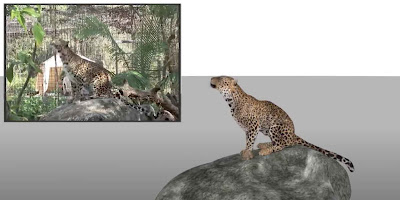
Leopard Animation by Daniel Amor
The use of live action reference to create great animation is one of the key techniques that students learn at BNU. But one of the dangers of using live action is that, if you follow it too closely, the animation can seem floaty and weightless.

Live action reference helps animators to create believable, realistic animation. Once you have done that, push it further. Go beyond the live action, push the poses, make the transitions snappier. Give the audience a reason to watch your work - give a performance

Sunday, 28 January 2018

50 Ways to Sit by Kevin Parry


50 Ways to Sit by Kevin Parry follows on from 100 Ways to Walk, an inventive and clever imagining on the many different ways in which people move, and what this tells us about their character and personality. 50 Ways to Sit takes the same idea, and shows how much variation there in the way that different people might carry out a normal, simple action, like sitting down. It also shows how important it is for animators to get used to acting out their shots, filming themselves, and then using the footage as reference for their work. It's one of the most important, and least well understood, parts of the animation process.

Wednesday, 13 September 2017

100 Ways to Walk by Kevin Parry


Check out the excellent "100 Ways to Walk" by Kevin Parry, a collection of walk cycles intended as inspiration for animators. The key point of the video is that the way we walk says a lot about who we are, how we are feeling, how our day has been. A great walk cycle is the entry point for character animation - can the animator describe a character simply by the way he or she moves? It's one of the first things we teach at Bucks, but a good walk cycle can remain elusive even for an experienced animator. Acting one out yourself, and filming yourself doing it, is a great way to get started.

Wednesday, 21 June 2017

Endless Reference for Animators - at YouTube

Using live action reference to inform your animation can be one of the best ways to get started as an animator.

I have used live action reference many times on many films, especially movies with human characters, such as The Road to El Dorado and Spirit - Stallion of the Cimarron, and especially on action shots where the motion was complex and hard to get right.

Sunday, 7 June 2015

How Did Disney Animators on Frozen Approach Their Shots?


Watch Disney's smash hit animated film Frozen and you will find some first class acting, beautiful work which arguably takes the medium to a whole new level of sophistication and skill. But how do animators achieve such great acting? The answer of course is just the same as it would have been at the Disney studio 70 or 80 years ago: if you want great acting, study great actors. Below is an excellent shot progression showing how animators on Frozen used live actiion reference to bring their shots to life.

Monday, 27 April 2015

How Do DreamWorks Animators Train Their Dragons?


How do animators train their dragons? Or, rather, how do they approach the complex and daunting business of creating a beautifully animated flying dragon? All animators start with a blank screen, and as professional artists we need methods that we can rely on to produce work we can be proud of, every time.  In this excellent documentary about the making of How To Train Your Dragon, DreamWorks animators talk about going to Flight School, analysing reference, and making sure that their animation was based on real, credible material that helped to bring their fantasy creatures to life.

Saturday, 31 January 2015

How to Use Live Action Reference to Create Believable Animation

Horse in Motion by Edward Muybridge
How can animators use live action reference to create believable animation?  Back in the old 2D days of hand-drawn animation, rotoscoping (as it was called) was a legitimate, if much debated, method of achieving a realistic look and feel to your animation.  Today, the technology has changed, but 3D animators can also benefit from using live action to help inform their animation, and this is especially the case when doing complex animal or creature animation. So how, in practice, does a MAYA animator use live action reference to get a great result? Below are some techniques for making it work.